A Short Visit, Planned Around the Show
Plan a short casino entertainment visit around one main show, with realistic transition time and optional stops that never crowd out the event.
How do you fit a casino entertainment visit around a show when you have only a few hours? Start by choosing the performance as the fixed point, then work backward to decide when to arrive, what to do before it, and which extras can be skipped. That approach is useful in Hòa Bình, where a venue’s entertainment offer may sit alongside dining, lounges, gaming areas, or other resort facilities.
The aim is not to see everything. It is to reach the event without rushing, have a little room for the unexpected, and make any additional activity a choice rather than an obligation. A short plan should be specific enough to guide you and loose enough to survive a queue, a slow meal, or a change in mood.
Choose the show before choosing the rest of the visit
Begin with the event itself: its advertised start time, venue, entry conditions, and expected finish if that information is available. Check the official venue or ticket information for the current details. A start time alone does not tell you when doors open, whether late entry is allowed, or how long it takes to reach the seating area.
Then decide what makes this event the priority. You might want to hear the full performance, see a particular section, or simply enjoy an evening out without spending the time watching the clock. Naming that priority helps you judge every proposed extra: does it support the main event, or compete with it?
Think about practical needs before adding stops. Consider who is coming, whether anyone needs accessible routes or a quieter break, and whether the group prefers a meal before the show or a light refreshment afterward. If the venue has several buildings or entertainment zones, confirm the event’s location rather than assuming that the nearest lounge or dining room is nearby.
Work backward from the event and leave room to move
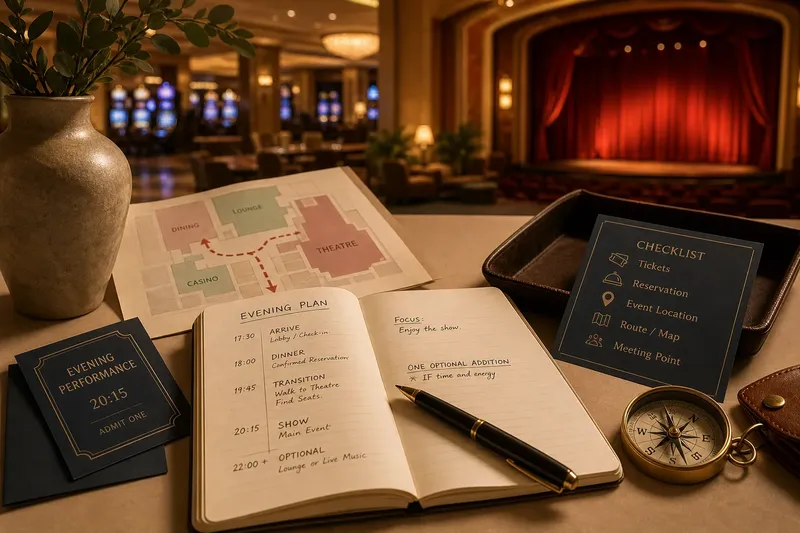
Once the show is fixed, sketch the visit in reverse. Mark the time you want to be at the event entrance, then allow for the walk from the arrival point, finding the correct room, and any check-in or ticket process. Add a transition before that: time to leave a meal, finish a conversation, or put away an activity without having to abandon it abruptly.
Use the venue’s map or directions where available. The word “near” can be misleading in a large property; a restaurant beside one lobby may still be a long walk from a performance room in another wing. If you are unfamiliar with the layout, choose a simple route and avoid planning a stop at the far end of the site immediately before the show.
Say you have an evening performance and want to eat first. You could reserve a meal in a dining room whose location is confirmed, set a personal time to leave, and keep the remaining interval for walking to the event and getting settled. If the meal runs late, the first thing to drop would be a post-dinner lounge visit, not the time reserved for reaching the show.
Keep the schedule in broad blocks rather than assigning every minute a task. A plan such as “arrive, eat, transition, attend the show” is easier to adapt than a chain of tightly packed appointments. The transition is not wasted time: it is what prevents one part of the visit from spilling into the next.
Set one main event and one optional addition
After the show, or before it if the timing works, choose at most one activity you would genuinely enjoy. That could be a drink in a lounge, a meal, live music elsewhere on the property, or a brief look at another entertainment space. The right choice depends on the program and layout, not on how many attractions appear in a directory.
Make the extra conditional in your own mind: it happens if you still have time and energy. This matters in casino settings, where a gaming floor may be open while other events are scheduled. If you choose to visit a gaming area, treat it as a separate optional activity, not a required stop or a way to fill every gap. Set personal limits that suit you and follow the venue’s rules.
It is not worth trying to sample every lounge, restaurant, or game format on a short visit. That turns an evening built around a performance into a route-planning exercise, and each added stop creates another transition. Pick the one extra that best fits the mood you want; let the rest remain possibilities for another occasion.
What should you check before leaving?
When should I arrive for a casino show?
Use the event’s stated arrival or doors information, then allow time to get from your entry point to the correct room. If the venue does not explain late entry or access arrangements, contact it before setting a tight schedule.
Should I eat before or after the performance?
Choose the option that leaves a comfortable transition and matches the event’s timing. A meal beforehand can make the evening feel settled, while eating afterward may suit a late show; check operating hours and reservations rather than assuming service will be available.
How many activities fit into a short visit?
Plan around one main event and add only what fits without compressing arrival, movement, or rest. If a second activity requires rushing or leaving the show early, it is not a useful addition to this visit.
What if the show time or venue changes?
Check the official event information again before setting out, and keep the rest of the plan easy to rearrange. A flexible meal or optional lounge stop is simpler to move than a string of fixed bookings.
Make the plan easy to follow on the day
Before you leave, keep the essentials together: ticket or booking details, the event location, the route from your arrival point, and any reservation information. A note on your phone is enough for many visits; a venue map can help if the property has several distinct areas. Share the main event time and meeting point with anyone in your party so no one has to reconstruct the plan in a crowded lobby.
Agree on a simple fallback for delays. For instance, if the group arrives later than expected, go directly to the show and remove the optional stop. If someone needs a rest, choose a nearby place to pause rather than splitting up to chase a separate attraction. These decisions are easier when the extra activity was never treated as essential.
Keep food, mobility, and access needs in view as you choose the route. A shorter walk or a seated pause may matter more than squeezing in another venue. Where a booking, entry condition, or access arrangement depends on the specific event or property, confirm it with the venue before you go.
Let the show remain the center of the visit
A short entertainment visit works best when its shape is clear: one event to anchor the outing, a realistic transition into it, and optional time that can be removed without regret. For a casino entertainment visit in Hòa Bình, that means choosing the performance first and treating dining, lounges, or gaming as supporting choices rather than a checklist of attractions.
When the evening begins, follow the plan but pay attention to the people with you. If everyone is content after the show, stay for the chosen extra; if the performance was enough, leave without trying to justify the decision. A well-planned short visit is not the one that fills every available moment, but the one that makes the main event easy to enjoy.