How to Read a Venue Directory Without Mistaking Labels for Promises
Learn how to read a venue directory by separating wayfinding from service details, so you can choose a meeting point or amenity that fits your plans.
Does “lounge” mean a quiet place to talk, a bar, or simply a room with chairs? A venue directory in Hòa Bình can help you find an amenity, but its layout is most useful when you read it as a map rather than a description of your visit.
Read the map for location and the signs for direction
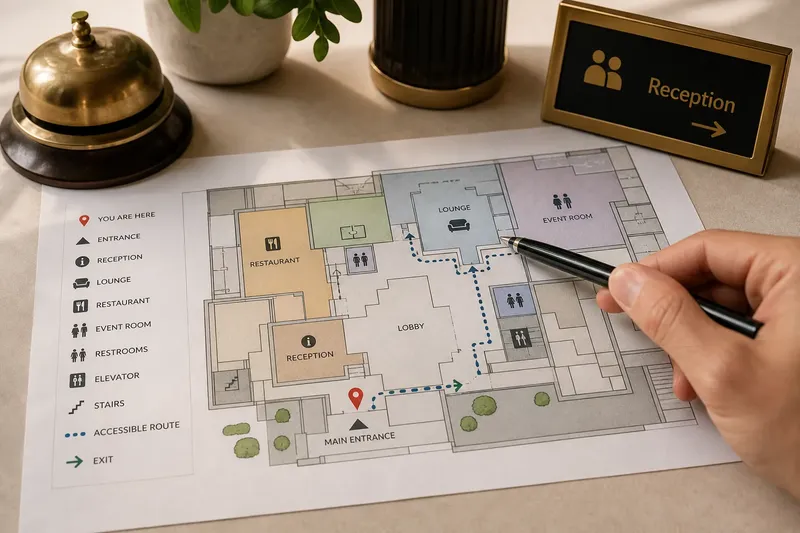
Directories are designed to help people move through a venue. A floor plan may show entrances, corridors, restrooms, dining areas, event rooms, and guest services, while arrows connect those places to a route.
Start with a landmark you can identify, such as the main entrance, reception desk, or a stairwell. Trace the route from that point to the destination, then compare the map with signs at turns and intersections. If the printed plan uses abbreviations or color blocks, check its legend before setting out.
For a large or unfamiliar venue, note the floor and nearest named landmark rather than relying on an amenity label alone. “Second floor, beside the east stairwell” gives a group a more useful meeting instruction than “by the lounge.”
Distinguish map symbols from service descriptions
A symbol usually marks a place or facility. A short label names a category. Neither necessarily explains how a space works: a restaurant icon can locate a dining area without describing its seating arrangement, and a lounge label can mark a room without saying whether it is intended for conversation, waiting, or food service.
Look for a legend, notes, or separate service information. A map may use distinct symbols for accessible routes, elevators, restrooms, or exits; those symbols are useful for orientation, but they do not replace asking about a specific access need or service.
If the directory is posted near an entrance, use it to choose a route. If you need to know what happens at the destination, look for a sign at the room or ask a staff member a direct question about that feature.
Choose a meeting point people can identify
Good meeting points are easy to describe and recognize. Prefer a named, public landmark with a clear approach, such as a reception desk or a marked information counter, over a broad area with several entrances or similar-looking rooms.
Give companions a fallback in case they arrive at different entrances or cannot find the same sign. For example, agree to meet at reception first, then ask staff for directions if the desk is not visible. This avoids sending one person searching through spaces they may not be able to enter.
Say you and a friend are arriving separately at a venue in Hòa Bình, and the directory marks a “lounge” near an event room. You want a place to sit and talk, not merely a point on the map. First, use the plan to identify the lounge’s floor and nearby corridor; next, ask staff whether visitors can sit there and whether it is suitable for conversation. If staff confirm both, use it as the meeting point; if not, choose a clearly identified public area such as reception. The result is a plan tied to a recognizable place and its actual use.
Which directory details help with common decisions?
How can I tell which entrance to use?
Find the entrance symbol and compare it with street-facing signs or the venue’s exterior landmarks. If several entrances appear, choose the one closest to your destination or ask staff which is open to visitors.
What should I do if a map uses unfamiliar symbols?
Check the legend before following the route, especially for floor changes, restricted areas, or accessible paths. If the symbol remains unclear, ask staff to point out the route rather than guessing.
How do I choose a clear meeting point?
Choose a named landmark that people can reach and recognize without entering a particular room. Share the floor and a nearby sign or doorway, then agree on a public fallback if the landmark is unavailable.
How can I check whether a route suits my access needs?
Look for elevators, ramps, and marked accessible routes, then ask venue staff about the specific path or facility you need. A symbol can help you locate a feature, but staff can clarify whether the route is usable for your circumstances.
Use a short check before setting off
Match the directory to the decision you need to make. Check the relevant detail, then choose an action based on what you see:
- Entrance: Observe whether the map marks more than one entrance; if one is closest to your destination, use it, but if access is unclear, ask staff which entrance is open.
- Floor: Observe whether the destination appears on another floor; if the floor is clearly marked, follow the indicated stairs or elevator, but if the map omits floor details, check the directory legend or ask for directions.
- Route: Observe whether the route includes a corridor or turn you can identify; if signs match the map, follow them, but if they conflict, stop and confirm the route with staff.
- Meeting point: Observe whether the landmark has a distinct name or sign; if companions can identify it, share that name and floor, but if not, choose a clearer public landmark.
- Access: Observe whether the directory marks an elevator or accessible route; if it does, use that route as a starting point, but if your needs are not addressed, ask staff about a suitable path.
- Amenity purpose: Observe whether the map provides only a label or also describes the service; if it gives enough detail for your plan, proceed, but if the use of the space matters, ask a focused question before relying on it.
Do not spend time decoding every label
It is not worth trying to infer a venue-wide definition from every room name. Labels often exist to make a map readable at a glance, and their wording may not describe the practical details you care about.
Focus on the route, the landmark, and any feature that could change your plan. If you only need to find a restroom or reception desk, the directory may be enough; if you need a particular kind of seating or service, ask about that specific need.
Use the directory to find your next useful question
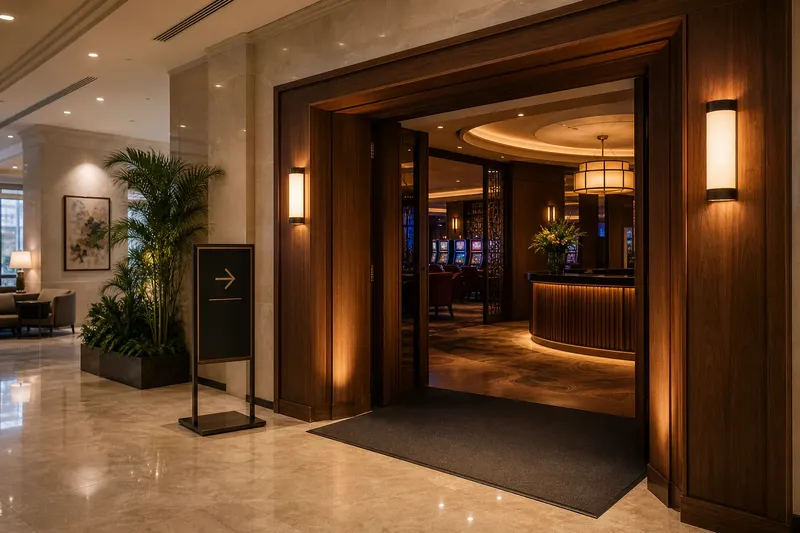
A venue directory is strongest at showing where things are and how spaces connect. For a casino-style entertainment venue in Hòa Bình, use it to orient yourself, identify a clear route, and choose a recognizable meeting point; use signs or staff to clarify how a destination serves visitors.
When you read a venue directory, separate the question “Where is it?” from “What can I do there?” That small distinction helps you move with confidence while keeping plans flexible when a map gives location but not context.